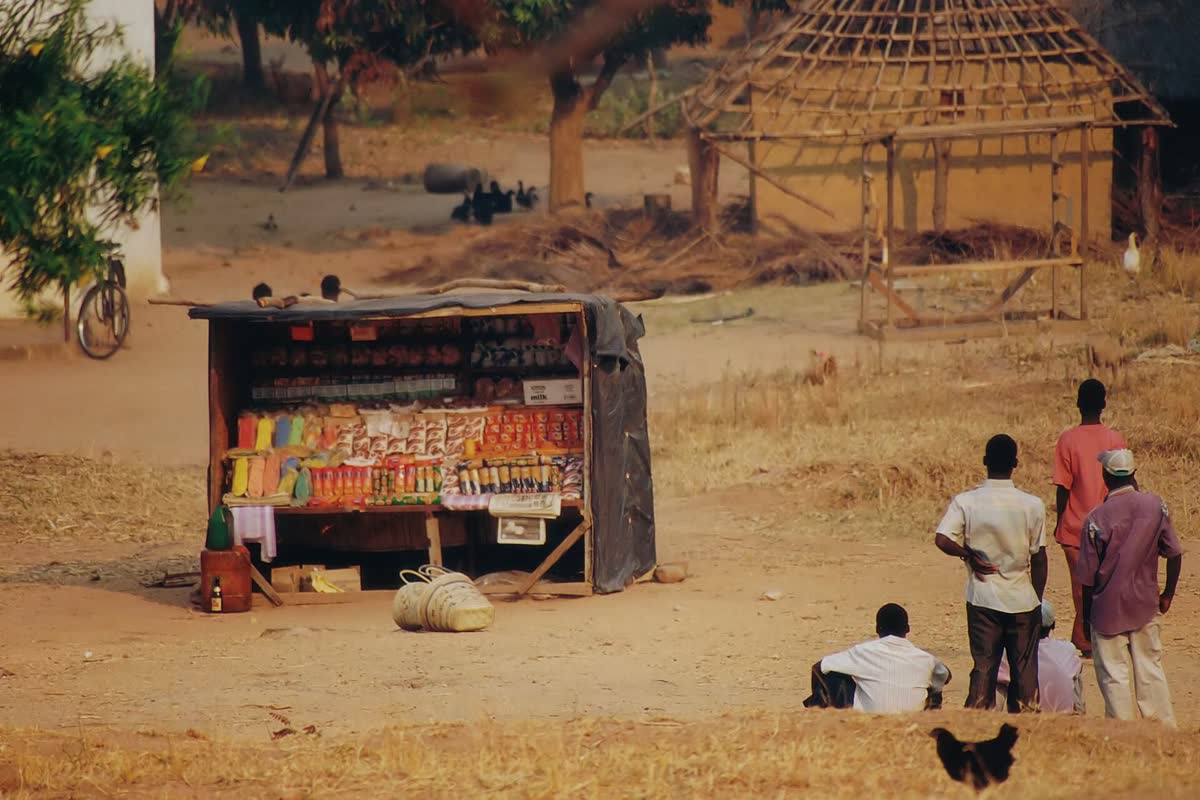
A grocery shop is one of the most common first businesses in Zambia, and one of the most crowded. The shops that last are rarely the ones with the best spot or the most stock. They are the ones whose owner knows, every evening, what was sold, what is left and where the money went. This guide walks through opening a shop step by step, and the habits that keep it open.
1. Register the business
Registering costs little and opens doors: a business bank account, supplying schools or companies, and borrowing on the strength of your records later.
- PACRA. Register a business name (or a company) with the Patents and Companies Registration Agency. You can search for the name and apply on PACRA's website. A sole trader usually registers a business name; a company suits a shop with partners or plans to grow.
- ZRA. Get a Taxpayer Identification Number (TPIN) from the Zambia Revenue Authority. Small businesses usually pay turnover tax, a percentage of sales, instead of income tax, and file each month. Ask ZRA which tax applies to you; to see what turnover tax would come to on your sales, use the turnover tax calculator on TapTip Tools, which keeps the current rates.
- The council. Apply for a trading licence from your city, municipal or district council. Fees and forms differ by council and by what you sell, so ask at the council offices before you sign for a space.
- Staff. If you employ people, register with NAPSA and pay their contributions every month. Pay below the tax threshold still needs NAPSA.
2. Choose the place
A grocery shop lives on people walking past. Before you sign a lease, stand at the spot at different times: early morning, lunchtime, after work, Saturday. Count the people who pass in fifteen minutes and note who they are: workers on their way to a bus, mothers on the way to school, traders going to the market.
- Near what people already walk to: a bus stop, a school, a clinic, the road into a compound, the edge of a market.
- What the nearby shops sell, and what they run out of. A shop that is always out of bread by 9 o'clock tells you something.
- Security and power. Burglar bars, a door that locks properly, and electricity for a fridge if you plan to sell cold drinks.
3. Work out the money you need
Most new shops run short of money in the second or third month, not the first. The first stock sells, but the owner has not kept back enough to restock and pay rent at the same time. Write the budget down before you spend.
Example start-up budget (example figures)
| Item | Amount |
|---|---|
| Rent: deposit and first month | K3,000 |
| Shelves, counter, a lockable drawer | K2,500 |
| Registration and trading licence | K1,000 |
| First stock | K10,000 |
| Cash float for change | K500 |
| Reserve: one month's rent and restocking | K5,000 |
| Total to have before opening | K22,000 |
The figures are an illustration: rents and licence fees differ a great deal between towns. The point is the last line before the total. A reserve of at least a month's rent and a restock is what carries a shop through a slow start.
4. Buy the first stock
Start with what people buy every day, in sizes they can afford today: mealie meal, cooking oil, sugar, salt, bread, soap, washing powder, matches, candles, airtime, drinks. Small packs sell faster than large ones in most neighbourhoods.
- Compare two or three wholesalers before you settle, and ask about delivery. A cheaper price an hour's bus ride away can cost more than it saves.
- Buy a little of many lines rather than a lot of a few. In the first weeks you find out what sells; keep money back to buy more of it.
- Keep every invoice. It is your proof of what you paid, which you need for pricing and for tax.
- Check deliveries against the invoice before the driver leaves: count the boxes, open one, check the dates.
5. Set your prices
Work from what each item really cost you, delivered to the shop, not just the price on the invoice. Add your markup, then compare with the shops nearby. Everyday basics carry a small markup and sell fast; slower and convenience items need more to be worth the shelf space.
Example: K58 × 1.12 = K64.96, sold at K65
Our guide to markup and margin goes through this in detail, including why a 25% markup is not a 25% profit. Write every price down, on the shelf or on a list at the till, so whoever is selling charges the same.
6. Keep records from day one
This is the step most new owners leave for later, and the one that decides whether the shop survives. Without records you cannot tell a good week from a bad one, see which products make money, or notice stock walking out of the door.
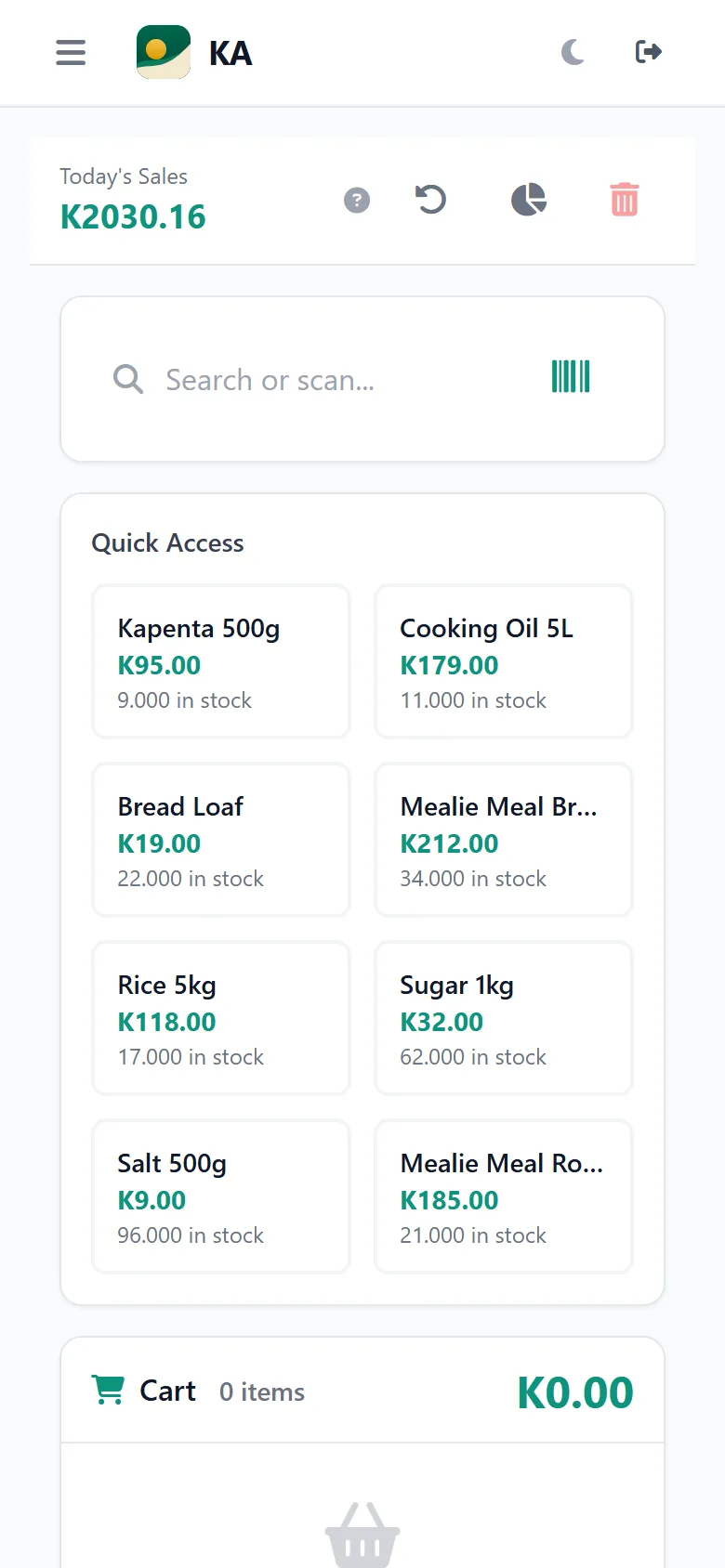
- Every sale, every day, split into cash, mobile money and credit. The daily sales record sheet does this on paper.
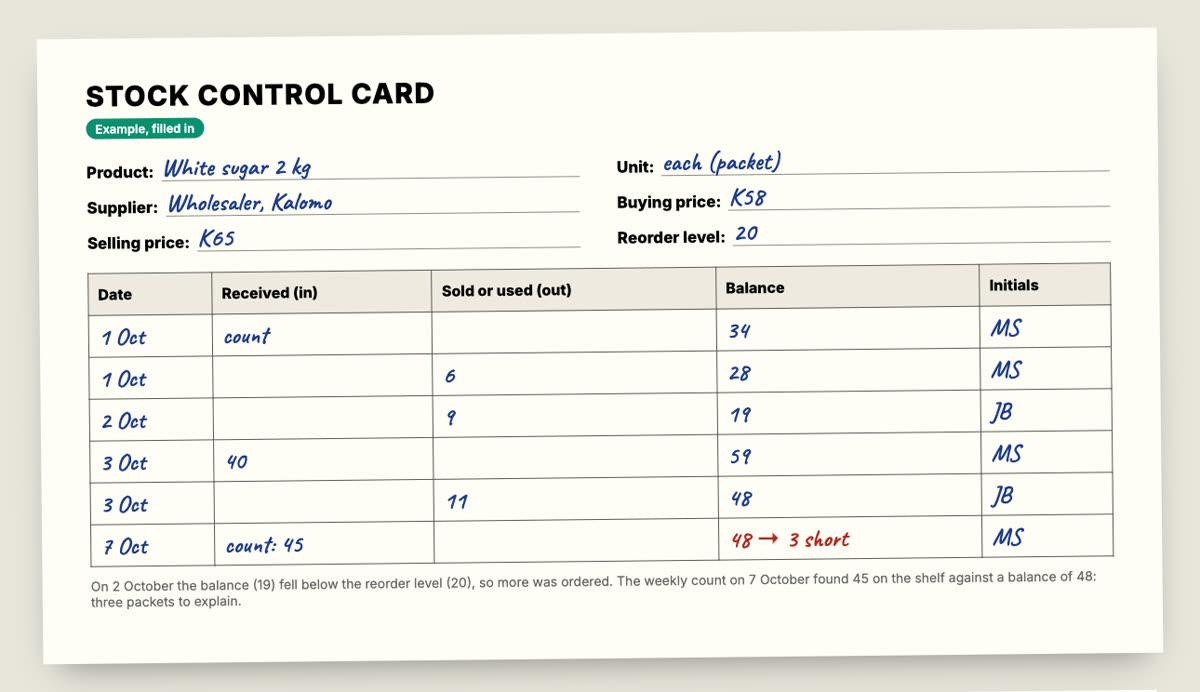
- A stock card for each product that sells fast or costs a lot, and a count of the shelf each week. See the stock control card.
- A cash count at closing, compared with what the sales say should be in the drawer.
- A credit book with each customer's name, what they owe and what they pay back. Money owed is still your money.
- The shop's money kept apart from yours. Pay yourself a fixed amount each week or month. Taking from the drawer when you need it is the quickest way to lose track of whether the shop is making money.
7. The first month
Treat the first month as the time to learn what your customers want.
- Week 1: write down everything people ask for that you do not have.
- Week 2: restock what sold out, and add the two or three things asked for most.
- Week 3: count the shelf and compare with your stock cards. Find any gap while the numbers are small.
- Week 4: add up the month: sales, what you paid for stock, rent and other costs. That number, not the money in the drawer, tells you whether the shop is working.
Then keep doing the same, every month. A shop run on records gets better every month, because each month you know a little more about what sells and what does not.