Ask a safari guide in Livingstone, a driver on a transfer, or a waiter at a lodge how tips usually go, and you hear the same story. The guest wanted to say thank you, reached for their wallet, and found only dollars, euros or a card. The moment passed. The tip never happened.
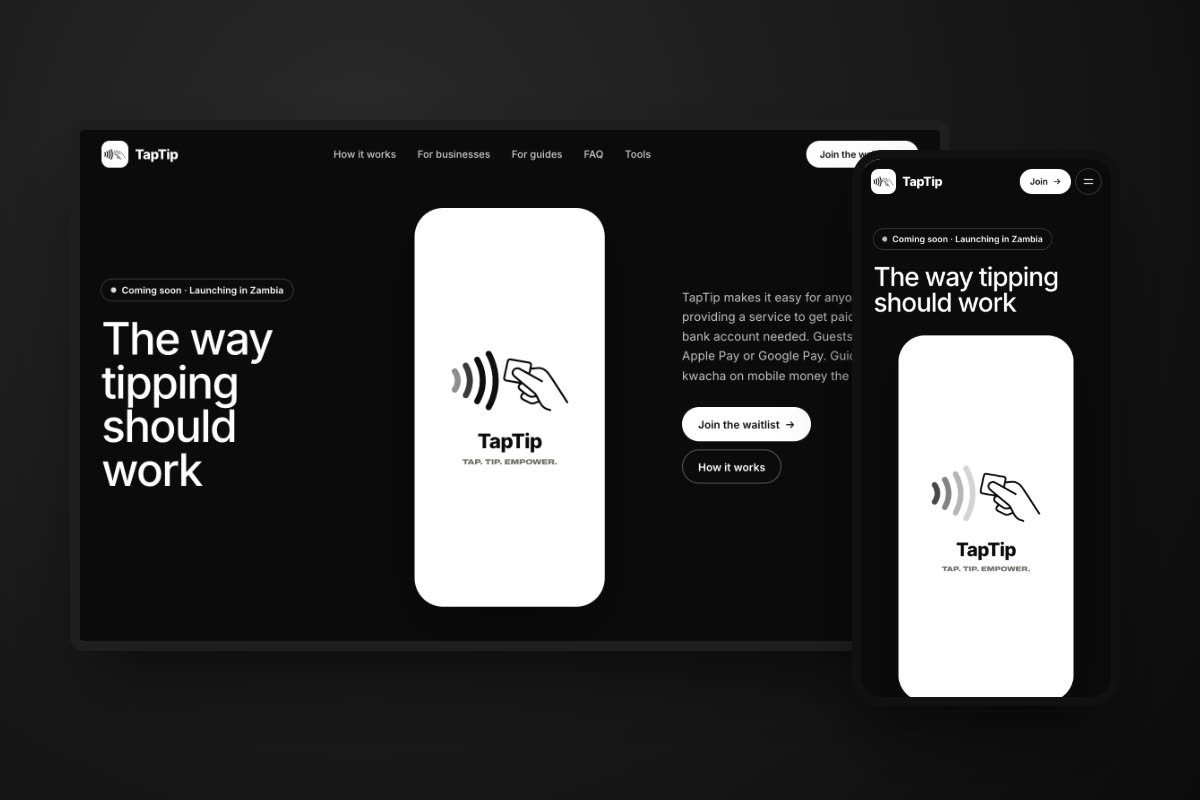
TapTip is a Zambian startup built around that moment. It lets a guest tip with the phone already in their hand, and the person who earned it receive kwacha on their own mobile money, with no bank account needed.
Disclosure: TapTip is from the same team that builds HORIZON Shop Tracker.
The problem with tips
- Guests don't carry kwacha. Visitors to Zambia arrive with cards and phones. Few think to change money for tips, and fewer carry small notes.
- The people who earn tips often have no bank account. But almost all of them have mobile money: MTN, Airtel or Zamtel.
- Cash at reception has its own problems. Someone has to count it, split it, keep it safe and hand it over, and the guide may never know how much a guest left for them.
How TapTip works
TapTip describes four steps, from the guest's camera to the guide's phone.
- Scan the badge. Every guide, driver and team member gets a TapTip QR badge. The guest points their phone camera at it and a simple page opens with the person's name and photo. Nothing to download.
- See every fee up front. Before paying, the guest sees three numbers: what they pay, TapTip's service fee, and exactly what the guide receives.
- Pay the way guests already do. Apple Pay and Google Pay work in the phone's browser, confirmed with Face ID or a fingerprint. Card details go to licensed payment partners, never to TapTip.
- Kwacha lands the same day. After a short safety check, the tip is paid to the guide's MTN, Airtel or Zamtel mobile money, with an SMS when it is on the way and when it lands.
For lodges, restaurants and shops
TapTip is aimed first at the businesses whose guests most want to tip: lodges and safari camps, tour and activity operators, hotels and guesthouses, restaurants and bars, and transport companies.
- No card machine, no hardware and no setup cost.
- Guests pay with the phone already in their hand.
- Every fee is shown before the guest pays, so there are no surprises.
- No cash to count, split or keep safe at reception.
For a business owner, it also answers a question that is hard to answer with cash: did the tip a guest left actually reach the person it was meant for?
For guides, drivers and staff
- No bank account needed. Tips go straight to MTN, Airtel or Zamtel mobile money.
- Free to join. Guides do not pay to sign up or to receive their badge.
- You always know. An SMS when a tip is coming and when it has arrived.
- Your number is protected. Changing the payout number needs a code and a safety wait, so nobody can quietly redirect your tips.
Where it stands
TapTip is launching in Zambia in stages, starting where tipping matters most. Right now the waitlist is open: guides, staff and businesses sign up, and the team visits, listens and plans the launch with them. The first guides, staff and businesses from the waitlist go live next, with every tip checked closely, and more towns, parks and businesses follow, from Victoria Falls to South Luangwa, the Lower Zambezi and Kafue.
Fees on TapTip's site are shown as an illustration; TapTip says final fees will be confirmed at launch.
Why it matters beyond tourism. The same idea, a QR code that turns a guest's phone into kwacha on mobile money, fits anywhere a customer wants to pay or thank someone without cash. For the people at the bottom of the service chain, getting paid directly and on their own phone is a real change.
Joining
If you run a lodge, camp, restaurant, hotel or transport business, or work as a guide, driver or member of staff, you can join the waitlist on TapTip's site. TapTip asks for your name, phone number, where you work and what you do.
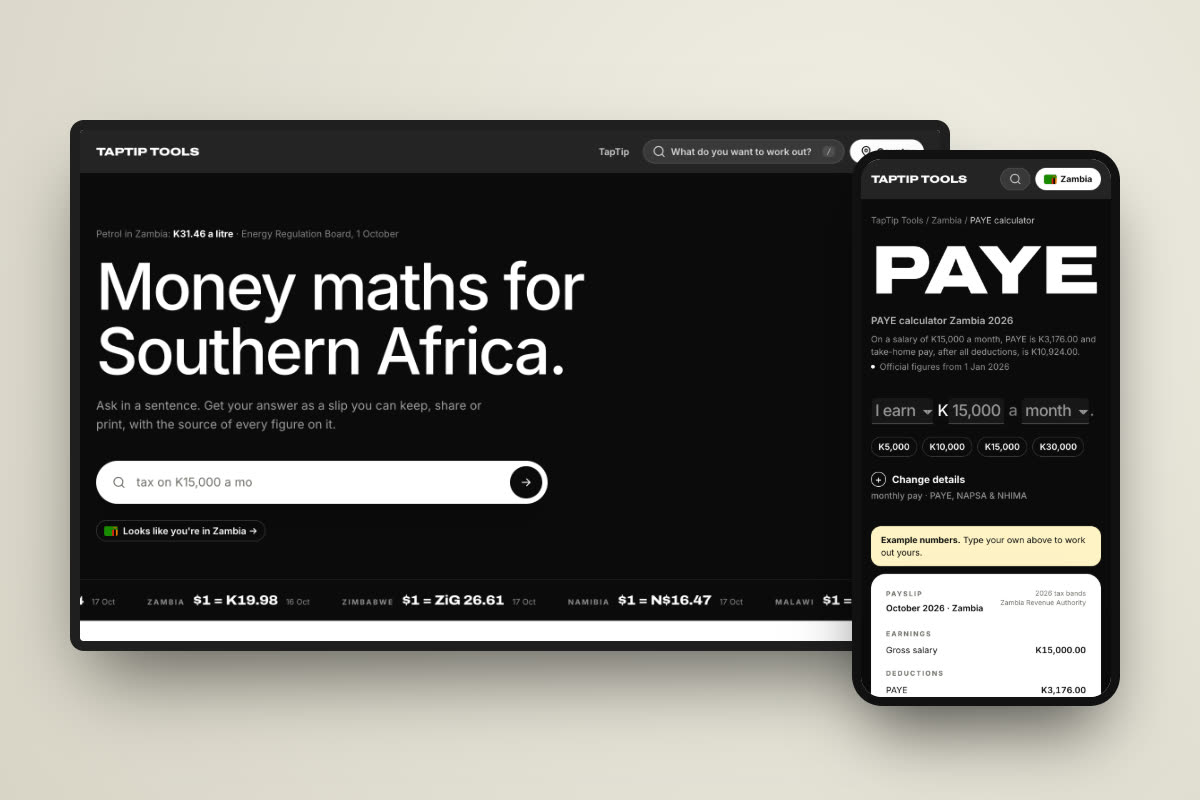
TapTip also runs TapTip Tools, a set of free calculators for Zambia and Southern Africa, which we look at in a separate article.